THE RISE OF NICHE RETREATS
There is a clear shift taking place across wellness travel. Where once broad, all-encompassing programmes defined the category, today’s traveller is seeking something more precise, more personal and more relevant to where they are in life, rather than where the industry assumes they are.
Niche retreats are not a passing trend. They are a response to a more discerning, more self-aware consumer who is no longer looking to “try wellness”, but to engage with it in a way that reflects their lived experience.
As Laura Montesanti, Founder of Synergy - The Retreat Show, notes, “What we’re seeing is not just a shift in wellness travel, but a deepening of it. People are no longer looking for a generic reset, they are seeking meaningful, impactful experiences that meet them where they are. When they take that precious time for themselves, they show up with intention, ready for genuine transformation.”
For the industry, this marks a significant evolution, and with it, a clear opportunity.

A MORE SPECIFIC CONSUMER
What is changing is not just demand, but expectation. Today’s wellness traveller is intentional. They are increasingly informed, often navigating complex personal landscapes, and looking for experiences that feel both relevant and safe.
They are asking: does this speak to where I am right now? Is this credible and well-held? Will I feel understood, not generalised?
Niche retreats answer these questions directly. In doing so, they reduce decision friction, increase perceived value and create a stronger emotional connection before a guest has even arrived.
LIFE-PHASE RETREATS: MEETING PEOPLE WHERE THEY ARE
One of the most significant areas of growth is life-phase programming. These retreats are designed around specific transitions, moments where individuals are more open, more reflective and actively seeking support.
Key segments include post-natal retreats, which support physical recovery, emotional steadiness and identity shifts through integrated care; perimenopause and menopause retreats, a fast-growing space addressing hormonal health, nervous system regulation and community for a historically underserved audience; life transition retreats supporting individuals through change such as career shifts, grief, separation or relocation; and retirement and conscious ageing retreats focused on purpose, longevity and meaningful connection in later life.
As Montesanti reflects, “There is something powerful about being supported at the exact moment you need it. Life-phase retreats acknowledge that people don’t arrive as blank slates, they arrive in transition. When an experience is designed with that in mind, it creates a level of connection and trust that is hard to replicate elsewhere. And when that experience is thoughtfully tailored to the individual, its impact deepens significantly, often becoming far more meaningful and effective.”
These experiences are defined by relevance. Guests feel seen before they arrive and that connection drives loyalty, repeat visits and long-term engagement.

FAMILY AND PARENTING WELLNESS: AN UNDERSERVED OPPORTUNITY
The traditional family holiday is evolving, with families no longer seeking only entertainment. They are looking for shared experiences that support connection, wellbeing and emotional development.
Family wellness retreats are increasingly replacing passive holidays, integrating movement, nature and meaningful shared activities. Parent–child mindfulness programmes are emerging to support communication, emotional awareness and deeper connection. At the same time, teen wellbeing retreats are growing in response to rising mental health challenges, with programmes focused on resilience, identity and confidence.
Montesanti highlights the wider potential here: “Family wellness is one of the most underdeveloped yet important areas in this space. When you create experiences that support both individual and collective wellbeing, you’re not just offering a holiday, you’re shaping how people relate to each other long after they leave. Having recently become a parent myself, I see this even more clearly, both in my own needs and in those around me. Those precious moments away, when shared as meaningful experiences, have the power to deepen connection and create something truly lasting within families.”
This is a high-value, repeatable segment, but it requires thoughtful design. Operators must consider safeguarding, qualified facilitation and environments that support both togetherness and independence. When done well, these retreats build multi-generational loyalty.
The Global Retreat Company lists some captivating opportunities for further exploration.
HEALING WITH NATURE: RETURNING TO WHAT WORKS
Nature is no longer being positioned as a backdrop. It is becoming the foundation. There is a growing understanding, both experiential and evidence-informed, that time in natural environments supports nervous system regulation, emotional balance and cognitive restoration.
As Jess Brainch, Registered Psychologist and Founder of Find Your Wild, explains, “Spending time with nature brings us into the ecosystem in which we are designed to belong. When we are with nature, our systems respond to this inescapable and intimate relationship.”
What is shifting is how this is being delivered. Rather than unstructured time outdoors, we are seeing guided immersion practices such as forest bathing and sensory awareness, movement through landscape including hiking and wild swimming, and facilitated reflection within natural settings. This is also increasingly evident in the rise of men’s retreats, where nature often becomes the primary setting for deeper work, offering a space that feels both grounding and accessible. Within this segment, we are seeing particularly strong growth, as more men seek environments that support connection, clarity and personal reset in a way that feels natural and unforced.
As Montesanti observes, “Nature has always been the original space for healing, and we are now rediscovering its innate power within the industry. When people step into settings that naturally slow them down, something begins to shift without force. The power of slowing down is often underestimated, yet deeply needed, in many ways, that alone is healing. The pace of nature is inherently slower, and there is something in that rhythm that gently teaches us to reconnect. The role of the retreat is simply to hold that space with intention.”
Nature slows the pace, reduces input and allows the body to recalibrate without force. For operators, this is both powerful and accessible. It requires less built infrastructure, but greater intentionality in how experiences are held and guided.
Read our full article: On How Nature Heals.

PSYCHEDELIC RETREATS: HIGH DEMAND, HIGH RESPONSIBILITY
Psychedelic retreats are emerging as one of the most talked-about and fastest-growing areas within niche wellness. Driven by increasing research, shifting regulation in certain regions and growing public curiosity, these retreats are positioned around deep emotional processing and behavioural change.
However, this is a category that demands caution. Legal frameworks and jurisdiction must be clearly understood. Clinical oversight, screening protocols and post-retreat integration support are essential, whilst practitioner training, ethics and lineage play a critical role in both safety and credibility.
As Heather Lee, Licensed Psychedelic-Assisted Psychotherapist and Co-founder of Wellness and Wisdom Journeys, explains, “Safety is not a checklist - it's a clinical orientation. Screening is not bureaucratic gatekeeping - it is harm prevention.”
This extends to how retreats are positioned and delivered. “This is not wellness tourism,” she notes. “Operators and agents who treat these offerings as an exotic spa experience are, in my clinical opinion, creating conditions for serious harm.”
Equally important is what happens beyond the experience itself. “The psychedelic experience itself is often the smallest part of the healing process. What happens in the weeks and months after, that is where the clinical work lives.”
For brands, this is not a space for light positioning or trend-led programming. Done responsibly, these retreats can be deeply impactful. Done poorly, they carry significant risk for both the individual and the operator’s reputation.
SOMATICS AND EMOTIONAL HEALING: WORKING THROUGH THE BODY
Alongside cognitive approaches to wellbeing, there is a growing shift towards body-based work. Somatic practices recognise that stress, trauma and emotional patterns are not only held in the mind, but in the body.
As Dr Cijith Sreedhar, Naturopathy Doctor and CMO, Prakrit Shakti Clinic of Natural Medicine by CGH Earth, explains, the body is “not just a physical structure, but also a mirror and messenger of our lived experiences.”
Retreat formats are increasingly integrating breathwork and nervous system regulation practices, trauma-informed movement and yoga, and bodywork and sensory awareness techniques. These approaches allow guests to access and process experiences beyond language, often leading to deeper and more lasting change.
Guests are responding in kind. Many report “deeper relaxation, emotional shifts, and a stronger connection with themselves,” with responses such as “I feel light” and “I feel cleansed,” adds Dr Cijith.
For operators, credibility and containment are key. This work requires trained facilitators, clear boundaries and a grounded, trauma-aware approach to ensure experiences are held safely and integrated meaningfully.
Join Dr Cijith Sreedhar on July 1st for an online seminar: Neuro-Somatic Healing: Resetting The Nervous System For Stress And Emotional Balance
PERSONAL DEVELOPMENT AND CREATIVITY: ACCESSIBLE TRANSFORMATION
Not all niche retreats require clinical depth. Some of the most accessible and commercially viable formats sit within creativity and personal development.
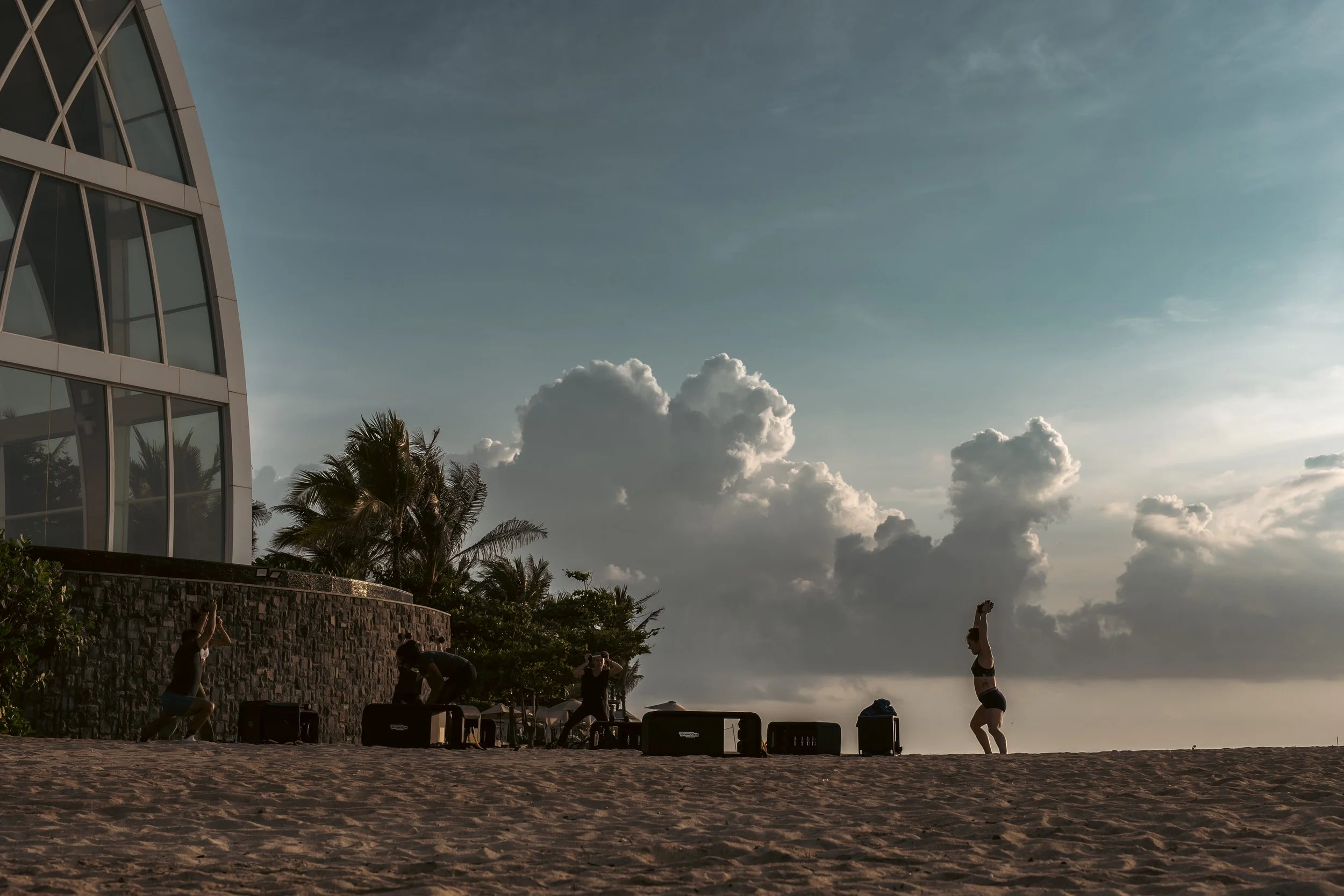
These include writing and storytelling retreats, art and creative expression, movement-based practices and leadership retreats with integrated wellbeing. Creativity offers a powerful entry point. It allows guests to explore identity, emotion and perspective in a way that feels open, non-threatening and self-directed.
For properties without established wellness infrastructure, this is a low-barrier, high-impact opportunity, particularly when paired with strong facilitation and inspiring surroundings.
THE COMMERCIAL OPPORTUNITY: WHY NICHE OUTPERFORMS
Niche retreats are not only aligned with evolving consumer demand, they are commercially strategic. A defined niche speaks directly to a specific audience, making marketing more efficient and effective. Specialisation increases perceived value and supports premium pricing. Read more on consumer motivations here.
As Montesanti notes, “Specialisation is not about limiting your audience, it’s about speaking clearly to the right one. When a retreat is well-defined, it builds trust before a guest even arrives, and that trust is what drives both impact and long-term loyalty. At the same time, creating something truly specialised is a continuous process, a journey of learning, refining, and deepening your understanding of who you are serving.”
Life-stage and identity-led retreats create repeat pathways and long-term loyalty, while also offering clearer storytelling for travel advisors and partners who need to match the right experience to the right client.
A SHIFT TOWARDS MEANINGFUL SPECIFICITY
This is not fragmentation, it is refinement. Niche retreats reflect a more mature industry, one that understands that wellbeing is personal, contextual and evolving.
As Montesanti concludes, “This movement towards niche retreats reflects a more mature, more responsible industry. It asks us to listen more closely, to design more thoughtfully, and to move away from assumptions about what people need. In doing so, we create experiences that feel more meaningful, more relevant and ultimately more human, and it is this depth of connection that naturally invites people to return.”
For those willing to specialise, to listen closely to the consumer and to design with integrity, this is not a narrowing of opportunity. It is an expansion into something more meaningful, more impactful and ultimately more sustainable.
Interested in learning more? Join us at Synergy - The Retreat Show 2026 in Croatia. Enquiries to info@theretreatshow.com.