
THE TRIP THAT NEVER ENDED
A Journey of Healing by Rich Naha, Founder of Surf Synergy.

I didn’t go to Costa Rica to reinvent my life. I went because it was during Covid, everyone was tired, and my family needed a vacation. We booked a one-week trip just to breathe a little. It was November of 2020 - precautions, lockdowns, uncertainty - and the idea of nature sounded like medicine.
Three days into the trip, I woke up with gout.
My left foot was red, swollen and felt like it belonged to someone else. I remember sitting on the edge of the bed, staring at it, confused. I’d always thought of myself as “healthy”.
I worked hard, I travelled, I built companies - and my body kept up. Until it didn’t. There wasn’t a dramatic moment. Just a quiet realisation: this was the cost of the lifestyle I had normalised.
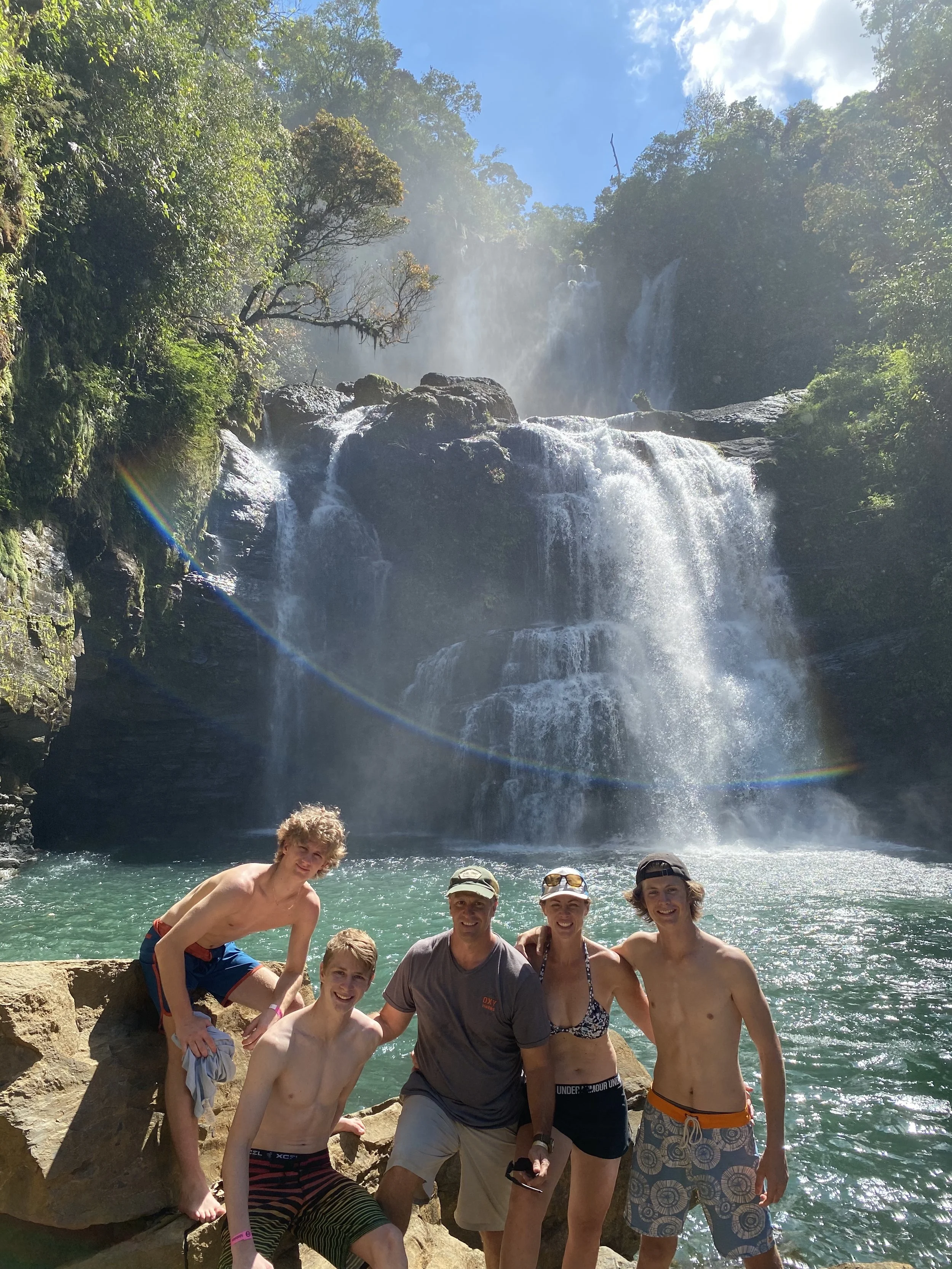
We were supposed to fly home in a few days. We stayed four months. Partly because I physically couldn’t move the way I used to. Partly because, for the first time, I wasn’t sure I wanted to go back to the version of life that caused it.
I was searching for a new lifestyle.


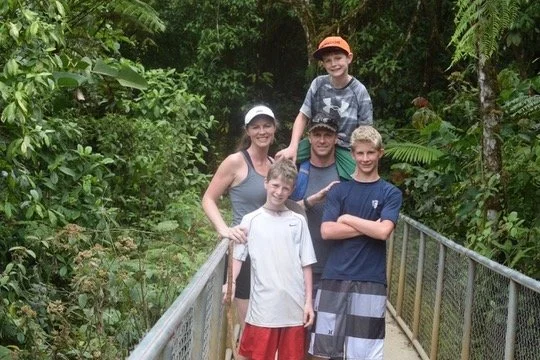
Costa Rica has a way of slowing you down even when you don’t want to. The mornings start earlier. The air is thicker. People talk to you in a way that isn’t rushed. And because our one-week trip had no plan beyond “rest,” I had space - real space - to sit with the quiet truth that turning fifty meant something I hadn’t acknowledged.
I wasn’t old. But I wasn’t young in the way I’d been relying on.
I met healers, movement teachers, and surfers - not through a programme, but through curiosity. Someone would send me to a breathwork session by the river. Someone else would show me mobility drills for my gout. A local taught me how to crack coconuts and told me to eat differently for inflammation. None of it felt like treatment. It felt like being shown a different way people live.
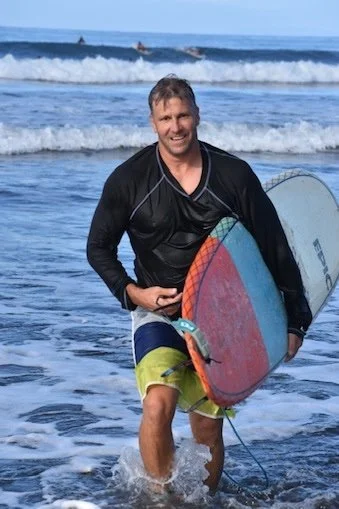
The most unexpected part of my healing journey began on the beach. I took a surf lesson.
I didn’t have a goal. I wasn’t chasing a metaphor. I just wanted to understand why everyone who surfed seemed younger than their age.



It was terrible at first — salt water up my nose, tripping over the board, paddling like an inefficient machine. Then on the third attempt, I stood up. Three seconds of movement turned into something I didn’t expect: purpose.
It was the first positive “why” I’d had for my health in a long time.
People talk about motivation like it’s discipline. For me, motivation arrived through joy.
Suddenly, eating differently wasn’t punishment — it was preparation. Mobility exercises weren’t a chore - they were the difference between catching a wave or missing it. I didn’t have to force myself to skip a glass of wine on Thursday night. I just wanted to feel lighter when I paddled next time.
“That’s when I learned something I now believe deeply: You can know the “how” of healing, but without a “why,” it’s hard to change.”
I’d spent years reading about nutrition, fitness, stress. I knew the facts. But facts don’t turn into transformation unless there’s something on the other side that pulls you forward.
Surfing became that pull.
Within weeks:
I was doing burpees every morning
I was practicing yoga to gain mobility
I was eating simply, with inflammation in mind
I was waking up before sunrise
I was thinking about my health in terms of surfing, not abstract wellness
It created what I call the positive spiral:
do something today > feel better tomorrow
feel better tomorrow > surf better next week
surf better next week > want to keep going
For the first time in decades, health wasn’t a goal I was chasing. It was a self-reinforcing loop that made me feel better in every direction.
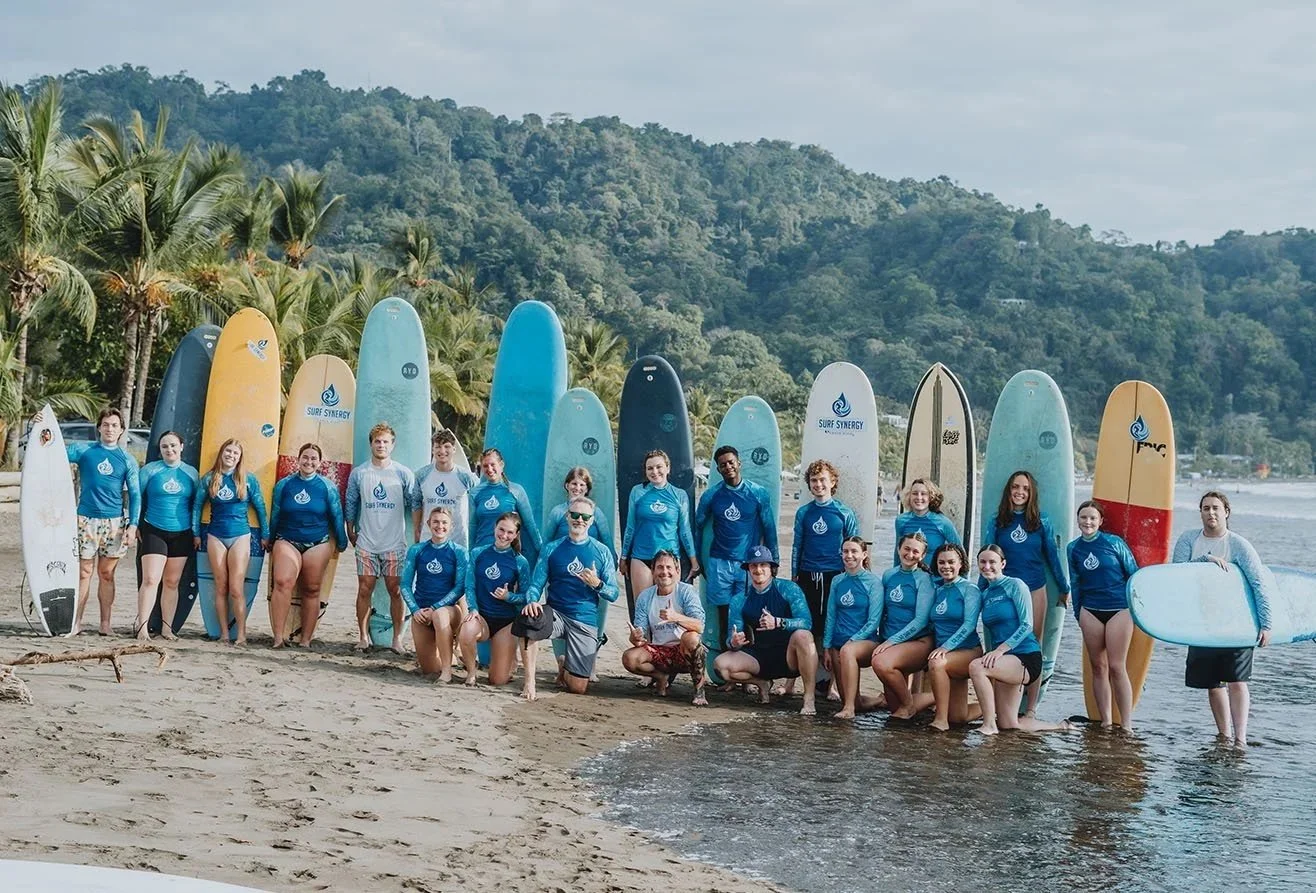
The other part of the healing wasn’t just physical. It was cultural.
In Costa Rica, I found a community where wellness isn’t an achievement - it’s a normal state of being. People stretch together before dawn because it feels good. They surf not to be impressive, but because sharing a wave with friends is a good way to live. Health wasn’t a project. It was something you do together, day after day.
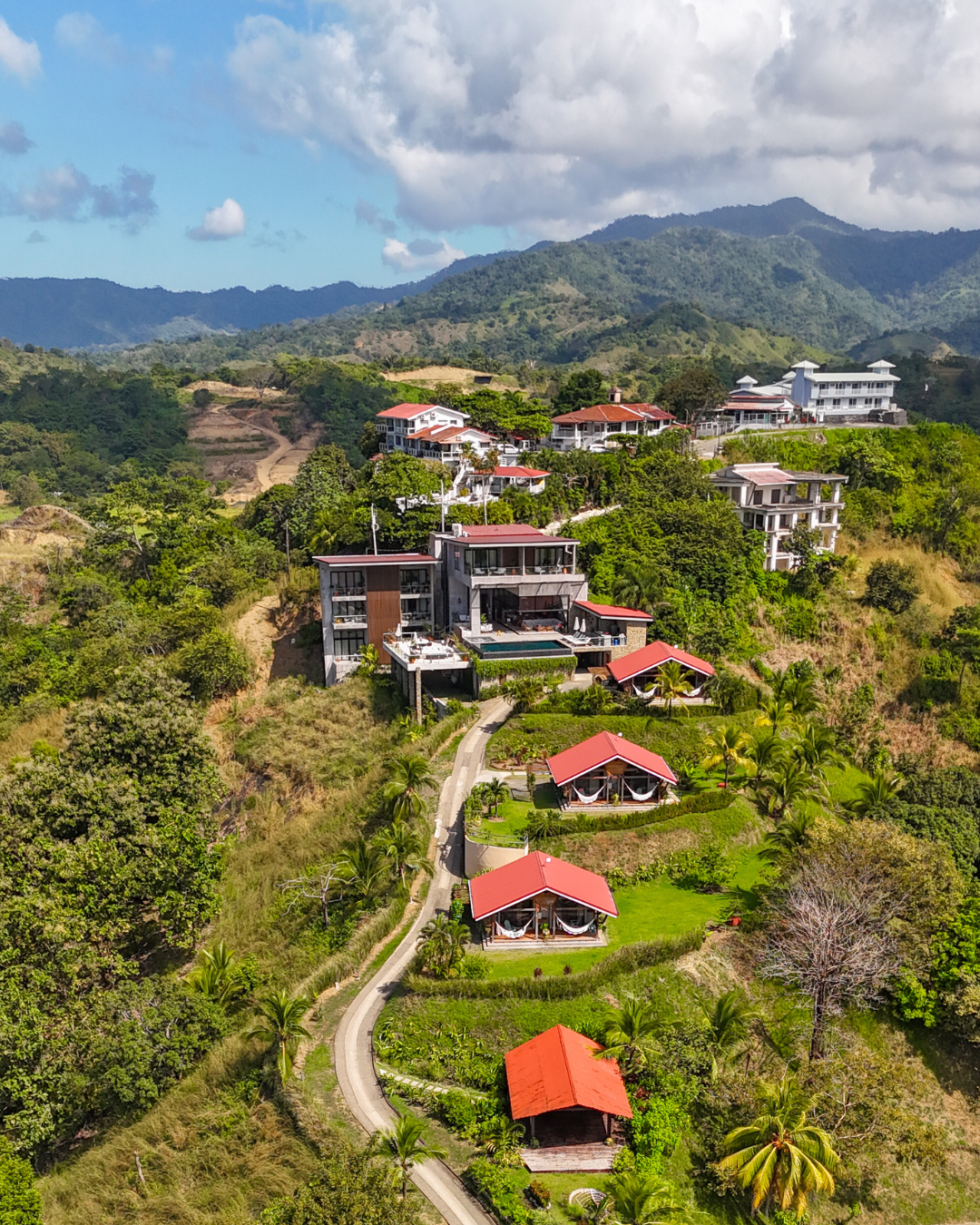
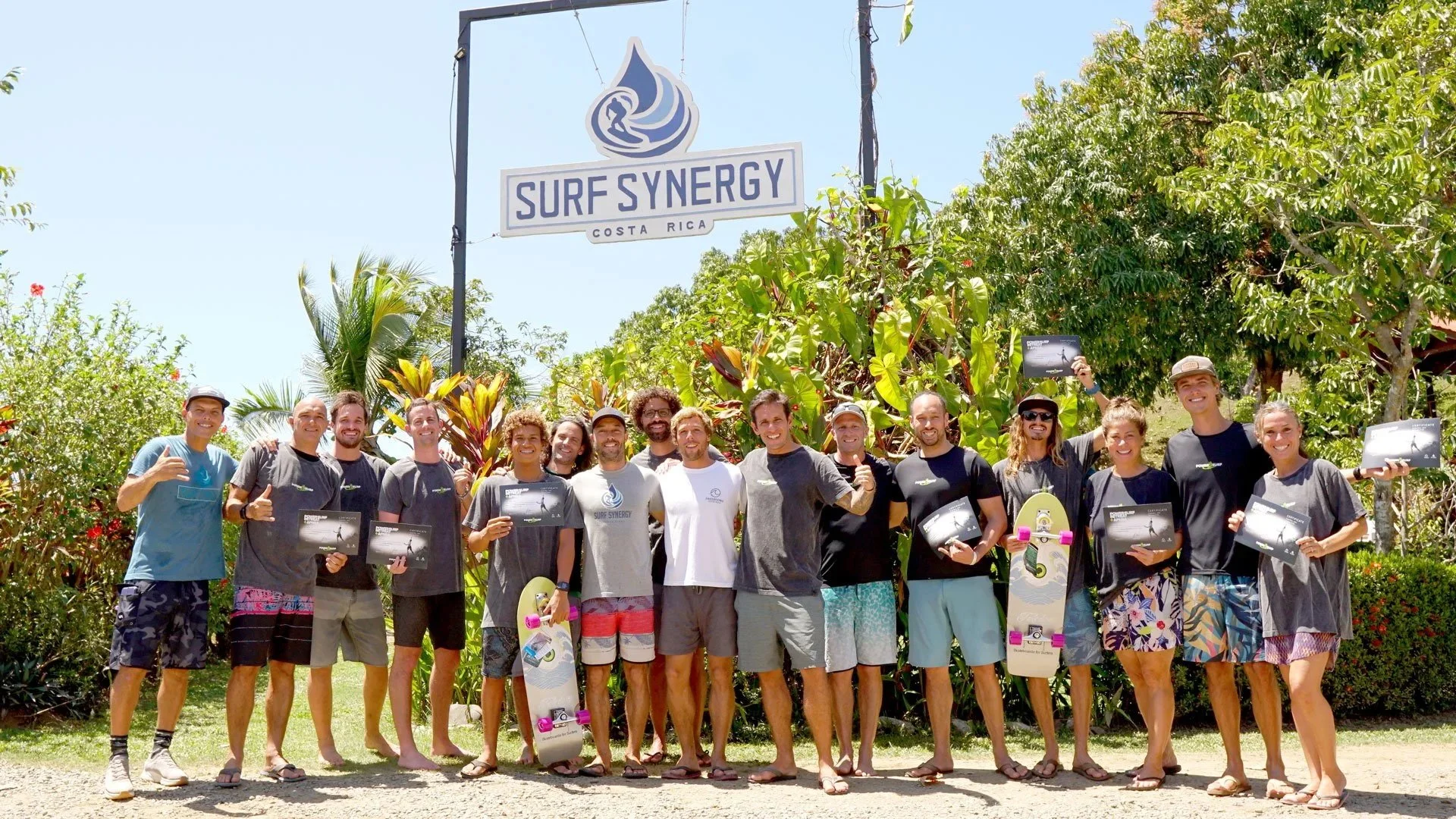
The kids' remote schooling ended and we had to go back to Denver, but I knew the lifestyle we were exposed to would be attractive to many people. We launched Surf Synergy on a whim, and it’s grown into the #1 Destination Spa in the World, according to Travel + Leisure readers.
The entrepreneur who arrived in Costa Rica, happened to be inflamed, exhausted and holding everything together through force. The man who left months later was leaner, stronger, slower in the best ways, and powered by something simple: I want to surf better next time.
My gout didn’t define me. But it interrupted me - long enough to see that healing is not dramatic. It’s quiet. It’s the moment you realise your body has been asking for help for years, and you finally have the space to listen.
I’m 56 now. I’m in the best shape of my life - not because I chase health, but because I chase that 5-second feeling on a surfboard. It’s funny how quickly five seconds became a reason to get up in the morning, to stretch more, to eat clean, to take care of myself like I’m investing in my future.
People ask if surfing “healed” me. I don’t think anything heals you on its own. I think joy heals you. I think community heals you. I think the right “why” makes all the “how” effortless.
For me, that why was a wave in Costa Rica, on the 40th day of a one-week vacation.
The journey never ended. It just turned into a lifestyle.
THE 10 TIBETAN BREATHS: A RITUAL FOR ENERGY, CLARITY AND INNER ALIGNMENT
When I want a practice that feels both ancient and immediately relevant, I return to the 10 Tibetan Breaths. It’s more than “breathwork” in the modern sense. It’s a short daily ritual designed to clear the system - physically, emotionally and energetically - so you can move through life with more presence.
At a high level, the practice is often described as doing three things:
Clearing and balancing energy.
Many traditions talk about the body as an energy system. The Tibetan Breaths are used to harmonise that system - bringing you back to centre when you feel scattered, overstimulated or heavy.Strengthening the “inner container.”
Over time, the practice is said to build resilience - less reactivity, more calm under pressure and a stronger capacity to stay grounded even when life is busy.Opening intuition and clarity.
In my experience, the most valuable outcome is subtle: the mind quiets, perspective widens, and you can hear your inner voice again. It becomes easier to choose what’s aligned, not just what’s urgent.
I love this practice because it’s simple enough to do consistently, yet deep enough to grow with you for years. It’s a reminder that wellness doesn’t have to be complicated to be profound.
CONNECT WITH RICH