
As wellness travel continues to evolve, internationally acclaimed author and management advisor B. Joseph Pine II challenges the retreat industry to reconsider what it is really offering. Is it a memorable experience, or an opportunity for lasting transformation? What makes a retreat truly transformative? Is it the experiences guests have during their stay, the way they feel when they leave, or the person they become in the months that follow?
Speaking at Synergy – The Retreat Show 2026 in Istria, Croatia, B. Joseph Pine II, Co-Author of the landmark book The Experience Economy and Author of The Transformation Economy, invited attendees to consider a fundamental shift in the nature of economic value, and the opportunity this presents for an industry built around human wellbeing. His proposition was simple but profound: the retreat industry is not merely in the business of creating experiences. It is in the business of guiding transformations.
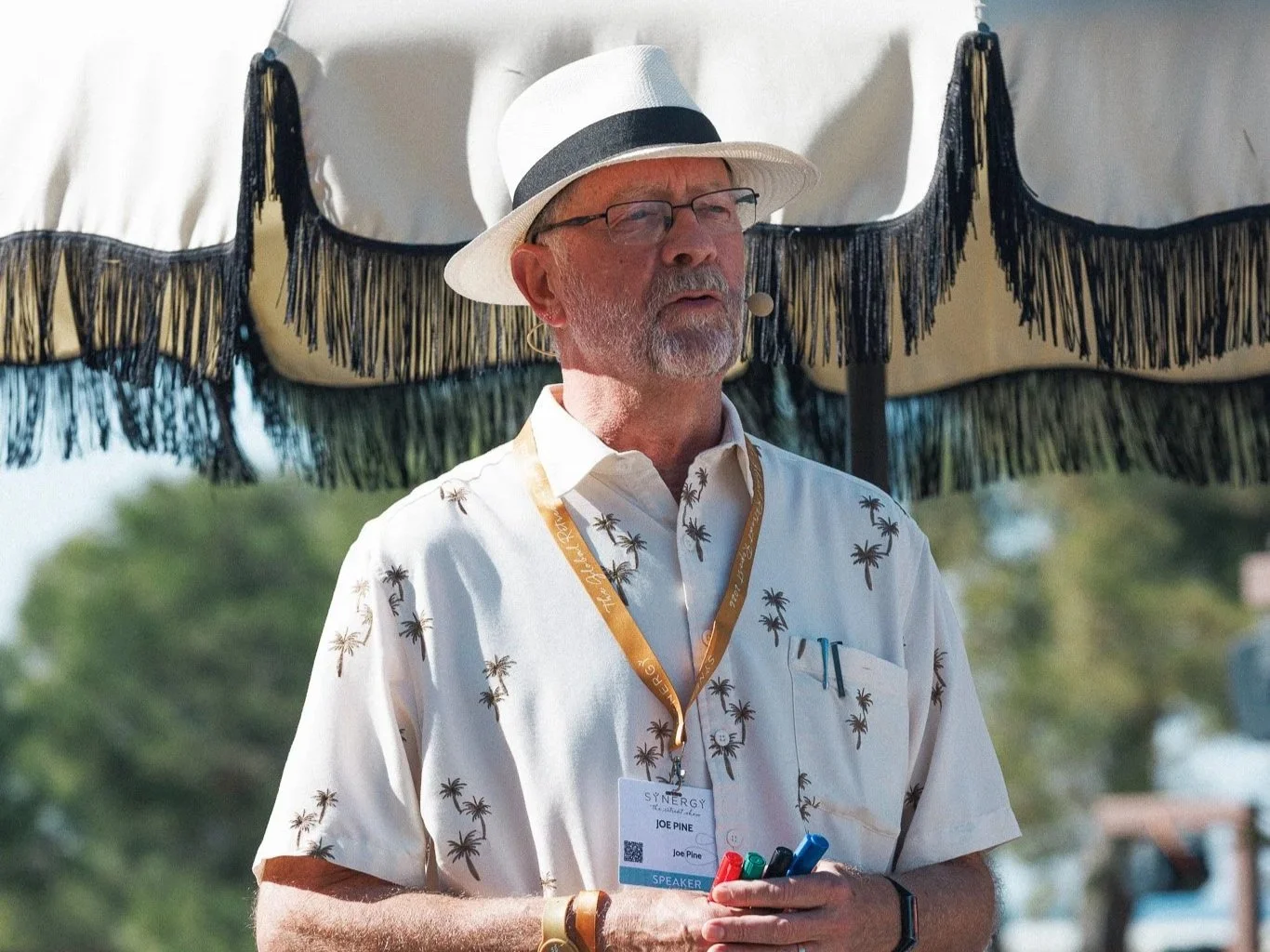
Joe Pine, speaking at Synergy - The Retreat Show, 2026 in Croatia
FROM THE EXPERIENCE ECONOMY TO THE TRANSFORMATION ECONOMY
Over time, the global economy has evolved from one centred on commodities to one built around goods, services and, more recently, experiences. As goods and services become increasingly commoditised, businesses must find new ways to differentiate themselves. Consumers are no longer simply looking for what they can buy, but for what they can experience.
Travel and tourism have long occupied a central position within the Experience Economy. However, with businesses across almost every sector now investing in experiential offerings, competition is no longer limited to those operating within the same industry. “Time, attention and money” are, according to Pine, the three currencies of the Experience Economy. Every business creating experiences is competing for these finite resources.
For retreat operators, hotels and wellness destinations, this raises an important question: how do you remain distinctive when extraordinary experiences are becoming increasingly commonplace? Pine argues that the answer lies in the next evolution of economic value: transformation. While an experience creates a memory, a transformation changes the individual. It uses experiences as the raw material through which people can move towards their aspirations, develop new capabilities and become who they want to be.
WHEN A MEMORABLE EXPERIENCE IS NO LONGER ENOUGH
The wellness industry has become increasingly adept at creating beautiful, immersive environments. From thoughtfully designed accommodation and exceptional food to movement practices, healing rituals and encounters with nature, there are countless ways to create meaningful experiences. Yet the quality of an experience does not necessarily determine its transformative potential.
Pine identifies four levels of experience:
Memorable experiences engage who we are and create lasting memories.
Meaningful experiences connect with our identity, values and sense of self.
Transporting experiences take us beyond our ordinary sense of self, through moments of awe, immersion, flow or transcendence.
Transformative experiences change us in some way.
Each level has value, but the distinction becomes particularly important for businesses positioning themselves within transformational wellness travel. A guest may experience profound relaxation, joy or a sense of connection during a retreat. These experiences can be enormously valuable in their own right. But if the guest returns home and nothing changes in how they live, relate to themselves or navigate their daily life, has a lasting transformation taken place?
For Pine, there is a distinction between a temporary change in state and a change in identity. “All transformation is identity change,” he explains. That change does not need to be dramatic, it may involve becoming someone who prioritises rest, develops a healthier relationship with food, feels more confident in their abilities or begins to live with a greater sense of purpose. The defining characteristic is that something about who the individual is, or how they understand themselves, has changed.

UNDERSTANDING THE PERSON BEHIND THE BOOKING
Central to Pine's thinking is the role of personalisation in creating economic value. His earlier work on mass customisation explored how businesses could serve customers uniquely, providing offerings that respond to their individual needs rather than expecting individuals to adapt to standardised products. Applied to the retreat industry, this means looking beyond a guest's preferences and beginning to understand their aspirations. Why have they chosen to come on retreat? What is happening in their life? What are they hoping to change? Who do they want to become?
Pine encourages businesses to think of their guests as 'aspirants': individuals with their own hopes, ambitions and desired outcomes. He uses a simple framework to help identify these aspirations: from and to. Who is the person today, and who do they want to become? An individual may initially express a desire to relax, improve their sleep or spend time away from work. Through thoughtful questioning, however, a more significant aspiration may emerge.
Perhaps they want to develop a different relationship with stress, reconnect with their sense of identity or create a life in which their wellbeing is no longer an afterthought. Understanding this distinction allows retreat providers to design experiences around the individual, rather than relying solely on the strength of a predetermined programme.
Pine also recognises that not everyone arrives with a clear aspiration. Travel can be a catalyst for discovering what matters to us, revealing possibilities we had not previously considered, this is part of its unique transformative potential. When people step away from their familiar environments, routines and responsibilities, they may become more receptive to new perspectives and ways of being.
CREATING THE CONDITIONS FOR CHANGE
One of the most important distinctions Pine makes is that businesses cannot transform people on their behalf. “You can't change customers. They have to change themselves. But you can create the conditions under which they can change.” This is particularly relevant in an industry where transformation has become a widely used marketing proposition.
The role of a retreat provider is not to determine what transformation should look like for another person, but to understand their aspirations and provide an environment, experiences and guidance that support their own process of change. It is an important distinction between delivering transformation as a promise and facilitating it as a possibility.
People arrive at retreats at different stages of their lives. Some are actively seeking personal growth, while others may be navigating significant life transitions, loss or changes to their sense of identity. Recognising these differences requires sensitivity to the individual and an understanding that transformation is not always a straightforward or linear process.
As Pine points out, there is often regression as well as progress. The responsibility of those guiding transformation is to remain responsive to the individual throughout that journey, rather than expecting everyone to follow the same path.
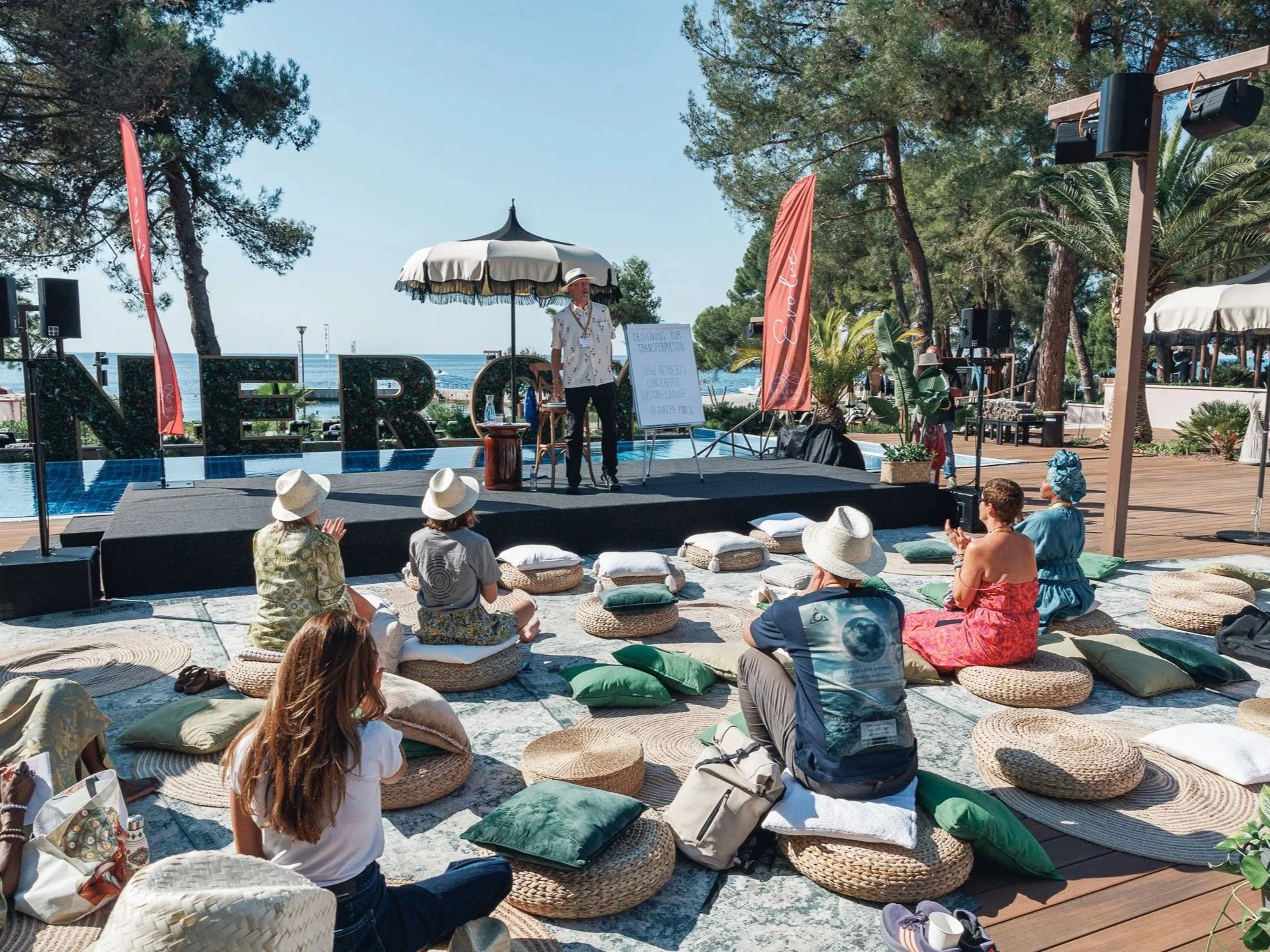
DESIGNING RETREATS FOR LASTING TRANSFORMATION
How, then, can retreat businesses increase the likelihood that their experiences lead to meaningful, lasting change? Pine introduces a framework he calls 'encapsulation', which places each experience within a wider process of preparation, reflection and integration.
Preparation: Before the Experience
Preparation begins before the guest arrives. It involves understanding their circumstances, exploring their aspirations and helping them consider what they hope to gain from the experience. For guests with a clear intention, preparation can help them connect the forthcoming experience with their desired outcome. For others, it can simply create an openness to new possibilities.
This could be facilitated through pre-arrival questionnaires, personal conversations, guided journalling or carefully considered information shared ahead of a retreat. The opportunity is to begin the transformative journey before the physical experience takes place.
Reflection: Making Sense of the Experience
An experience can become more meaningful when individuals are given the opportunity to reflect on it. Pine suggests approaching reflection through three perspectives: past, present and future. What happened during the experience? How did it make me feel? What has it revealed about myself, and how might I use this in my life moving forward?
For retreat leaders, this highlights the value of creating space within a programme, rather than filling every available moment with activities. Reflection enables guests to make personal meaning from their experiences and consider how they might influence their lives beyond the retreat.
Integration: Taking the Experience Home
Integration is perhaps the most challenging stage, but also one of the most important. Returning to familiar environments, relationships and responsibilities can make it difficult to sustain changes initiated during a retreat. Pine encourages businesses to consider how they can remain connected with guests following their departure, supporting them as they translate their experiences into everyday life.
Ongoing coaching, guided reflection, follow-up conversations, resources and continued engagement can all help individuals remain connected to their original aspirations. From this perspective, the end of a retreat is not necessarily the end of the relationship. It may be the beginning of another stage of the guest's journey. For an industry often focused on what happens between arrival and departure, this represents a significant opportunity to rethink the boundaries of the retreat experience.
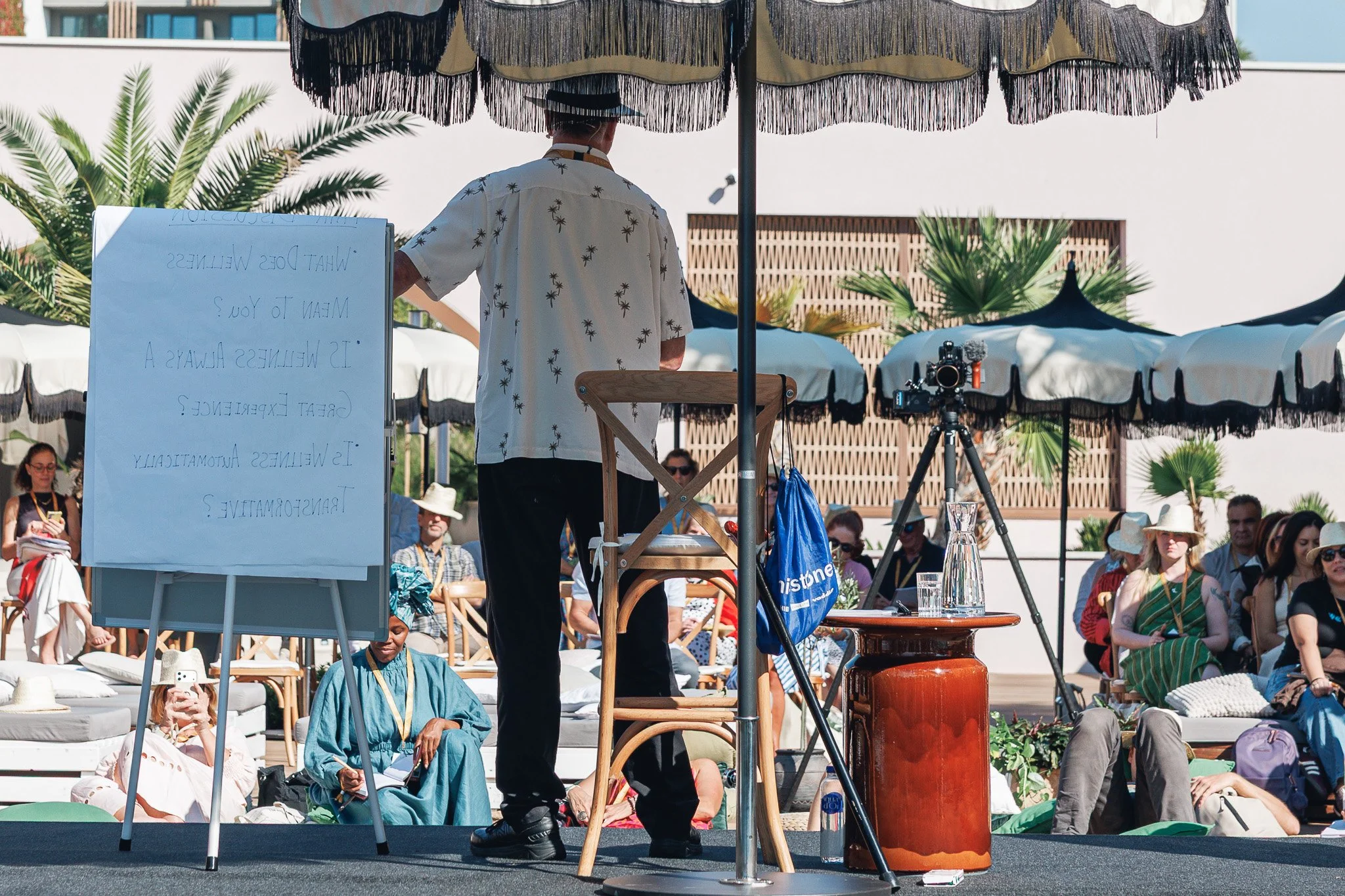
RETHINKING THE VALUE OF A RETREAT
The move towards transformation also raises interesting commercial questions. According to Pine, businesses are defined by what they charge for. Commodities, goods and services offer consumers 'time well saved'. Experiences offer 'time well spent'. Transformations, however, offer something different: 'time well invested'. Guests are investing not only their money but their time in becoming someone they aspire to be.
If the true value of a retreat lies in its outcomes, rather than simply the activities delivered, could the industry begin to rethink how it structures and prices its offerings? During the session's Q&A, Pine explored possibilities including ongoing memberships, follow-up programmes, success fees and transformation guarantees. However, he also acknowledged the difficulty of measuring transformation, particularly within the context of a retreat lasting only a few days. Some outcomes can be measured quantitatively, while others are inherently personal and qualitative. Businesses must develop confidence in their ability to support an agreed outcome before introducing outcome-based pricing.
For retreat operators, the opportunity may initially lie less in changing their pricing model and more in reconsidering what they define as success. Rather than measuring guest satisfaction alone, what might happen if businesses also explored whether guests had moved towards their aspirations, whether changes had been sustained and what additional support might be needed? This approach has the potential to reshape both the guest experience and the long-term relationship between retreat providers and their communities.
HUMAN FLOURISHING AT THE HEART OF TRANSFORMATION
Pine identifies four interconnected spheres of transformation: health and wellbeing, wealth and prosperity, knowledge and wisdom, and purpose and meaning. While the wellness industry may naturally identify with the first, its influence often extends across all four.
A retreat can offer opportunities to gain a greater understanding of oneself, develop new knowledge, reconsider priorities and reconnect with a sense of purpose. At the intersection of these four spheres, Pine places human flourishing. He describes flourishing as “the extent to which you are who you are meant to be”. It is a perspective that challenges businesses to reconsider their wider purpose and the relationship between commercial success and the lives of the people they serve. “Making money is not the goal of your business. Improving the lives of people is the goal of your business.”
For Pine, profit is a measure of how well a business fosters human flourishing. This places a considerable responsibility on those operating within the transformational wellness space, but also presents a compelling opportunity: to build businesses whose commercial value is intrinsically connected to their ability to improve people's lives.

THE FUTURE OF TRANSFORMATION WELLNESS TRAVEL
As the retreat industry continues to mature, its evolution may depend not simply on creating more extraordinary experiences, but on understanding what those experiences make possible. The physical environment, quality of hospitality, expertise of practitioners and design of a programme all remain important. However, within the Transformation Economy, these become the means through which something more personal can emerge.
For retreat leaders, wellness practitioners, hotels, destinations and travel advisors, the challenge is to look beyond the immediate experience and consider the wider journey of the individual. What are guests investing their time in? What are they hoping to become? And how can the industry support them in carrying meaningful change into their lives? Perhaps the most valuable measure of a retreat is not how exceptional it felt while we were there, but what remains with us long after we have returned home.
B. Joseph Pine II delivered his session, 'How Retreats Can Create Lasting Change', at the fifth edition of Synergy – The Retreat Show in Istria, Croatia, in 2026. An internationally acclaimed Author, Speaker and Management Advisor, his work explores the evolution of economic value through experiences and transformations.